
Sustainability Assurance in India – The Next Frontier in ESG Credibility
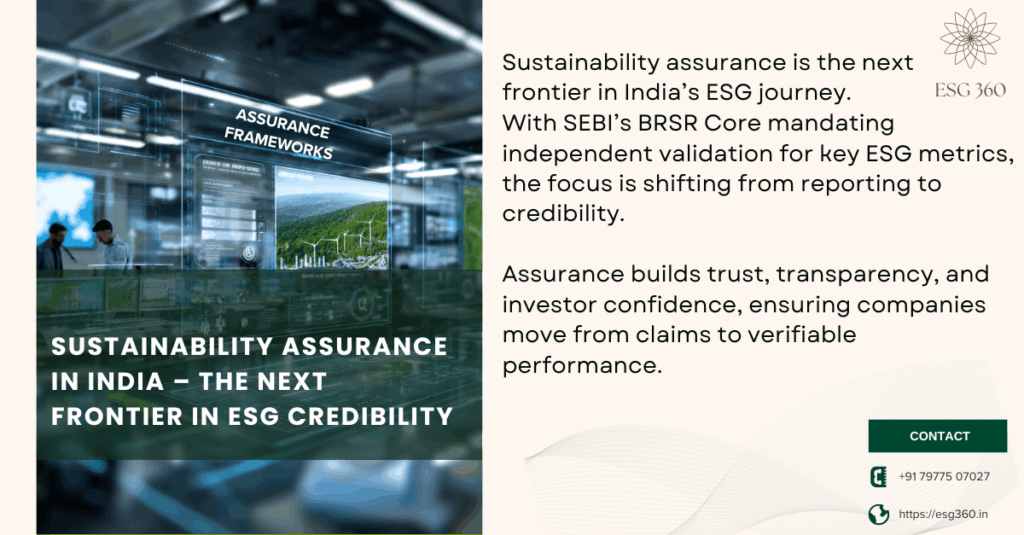
Introduction: The Shift from Reporting to Validation Over the last few years, Indian corporates have made significant progress in disclosing their environmental, social, and governance (ESG) performance through structured frameworks such as the Business Responsibility and Sustainability Report (BRSR). These disclosures have improved transparency and comparability but they also raise a critical question: how reliable […]
Beyond Compliance – Transitioning from BRSR Reporting to Strategic ESG Integration
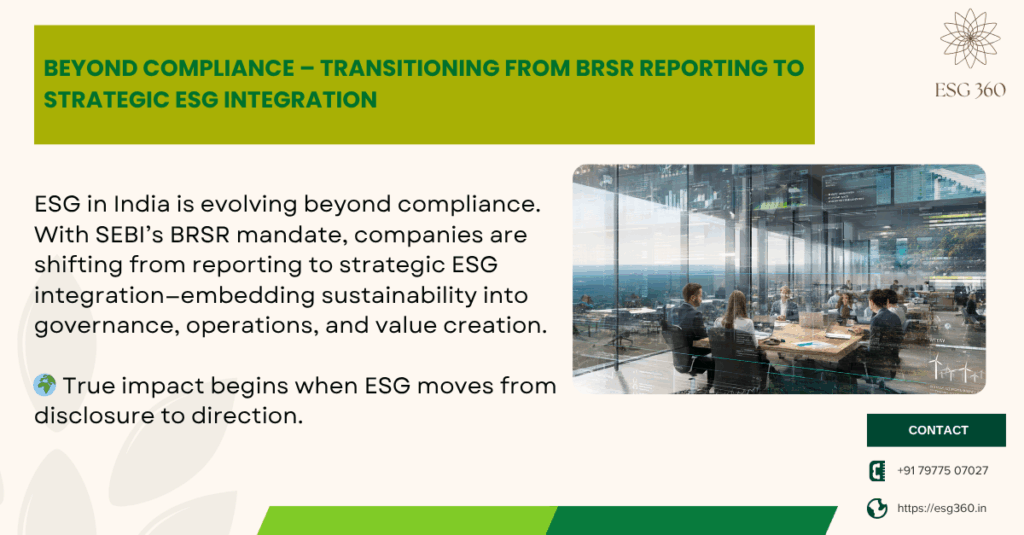
Introduction: From Disclosure to Direction Over the past few years, sustainability has transitioned from a voluntary, goodwill-based activity to a structured and measurable business imperative. With the introduction of the Business Responsibility and Sustainability Report (BRSR) by the Securities and Exchange Board of India (SEBI), the Indian corporate sector has witnessed a paradigm shift in […]
Water Stewardship: Building Resilient Water Management Strategies for ESG
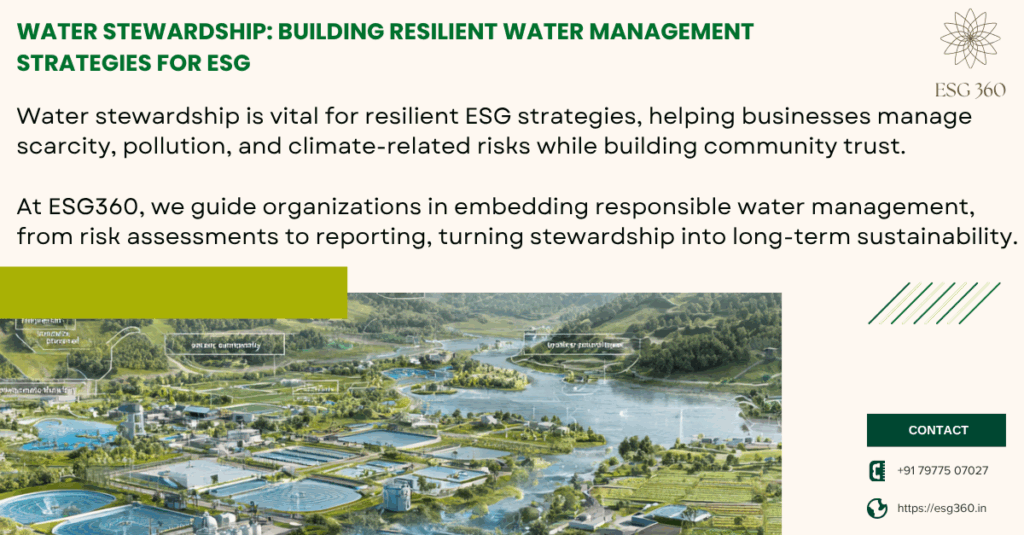
Introduction: Water as a Critical Resource in ESG Water is one of the most essential and yet increasingly stressed resources across the globe. Rapid industrialization, urban expansion, population growth, and climate change have contributed to water scarcity, pollution, and supply chain disruptions that affect businesses, communities, and ecosystems alike. Agriculture, manufacturing, energy, and consumer goods […]
Enhancing Employee Wellbeing as a Core ESG Commitment
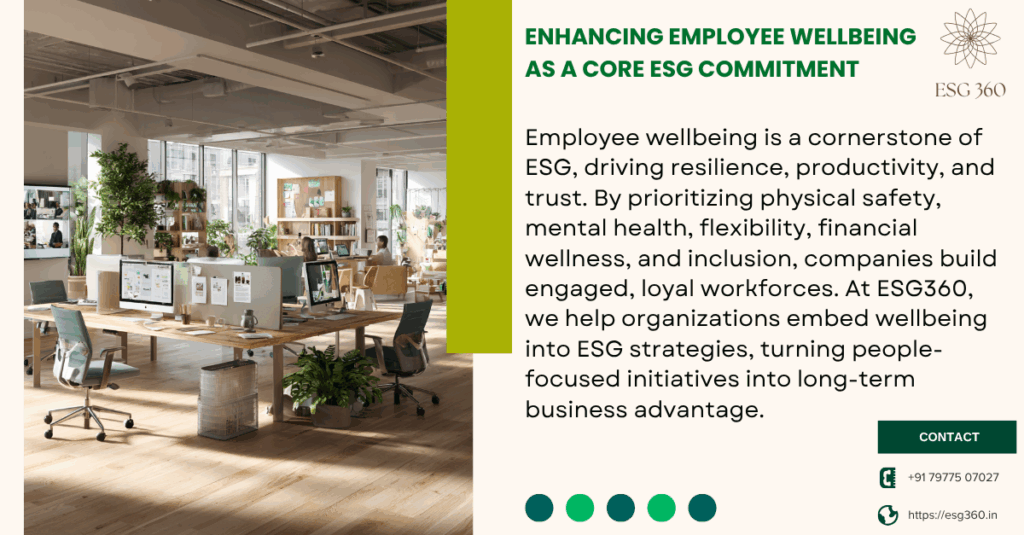
Introduction: Why Employee Wellbeing Matters in ESG As businesses increasingly integrate Environmental, Social, and Governance (ESG) principles into their long-term strategies, the ‘Social’ component is gaining renewed attention. Among various social considerations, employee wellbeing has emerged as a critical driver of organizational resilience, productivity, and stakeholder trust. Companies that prioritize the health, safety, and mental […]
Leveraging AI for Enhanced ESG Reporting and Compliance
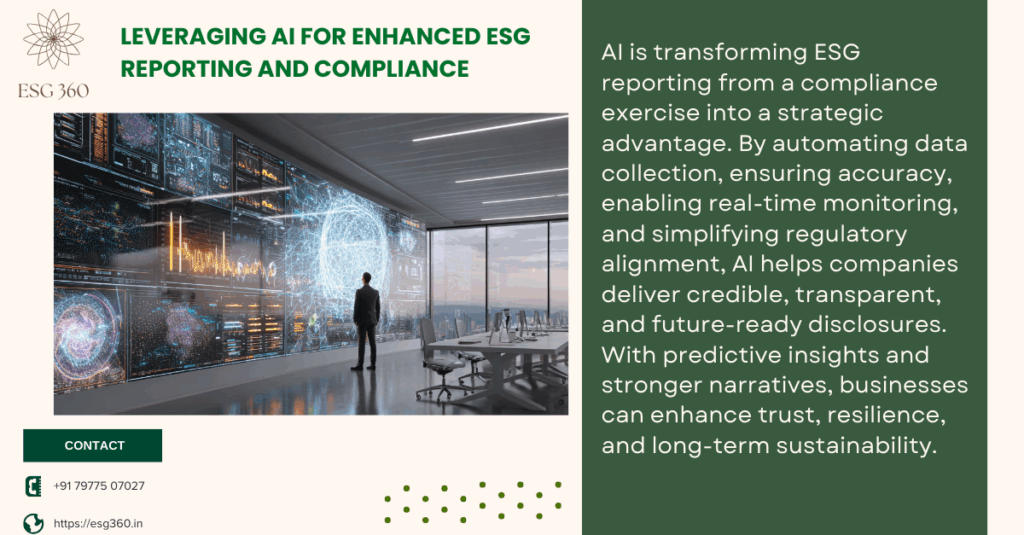
Introduction: The Rising Complexity of ESG Reporting As environmental, social, and governance (ESG) considerations become central to corporate decision-making, organizations face an unprecedented challenge in collecting, analyzing, and reporting data that meets regulatory expectations and stakeholder scrutiny. The expansion of ESG frameworks ranging from GRI Standards to SASB, TCFD, EU Taxonomy, and country-specific mandates such […]
Integrating Biodiversity into Corporate ESG Strategies
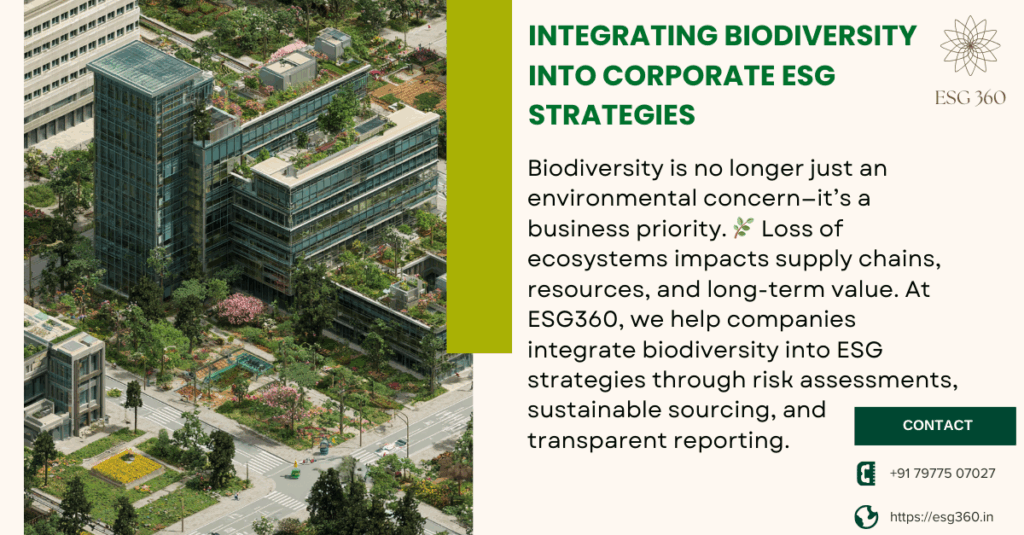
Introduction: Why Biodiversity Matters for Businesses Biodiversity, defined as the variety of life forms on Earth, including plants, animals, microorganisms, and ecosystems is the invisible backbone of ecological balance and human well-being. It ensures ecosystem services such as clean air, pollination, water purification, and nutrient cycling, which in turn support agriculture, healthcare, and industrial sectors. […]
CPCB Unveils New Guidelines for Waste-to-Energy (WtE) Plants

Introduction: Addressing India’s Growing Waste Challenge India’s urban centers are grappling with an ever-increasing waste burden as population growth, industrialization, and changing consumption patterns continue to exert pressure on local infrastructure. According to recent assessments, over 150,000 tons of municipal solid waste are generated every day in the country, with large metropolitan areas such as […]
From Data to Dialogue: Using GRI Reporting to Build Stakeholder Trust and Engagement
Sustainability reports are no longer technical disclosures meant for a limited group of analysts or regulators. They have evolved into strategic communication tools that influence how a company is perceived by its customers, employees, investors, and communities. Among the most widely accepted ESG reporting frameworks globally, the Global Reporting Initiative (GRI) Standards are structured to […]
Integrating GRI with Global ESG Frameworks: TCFD, ISSB, SDGs & More — Building a Holistic Sustainability Narrative
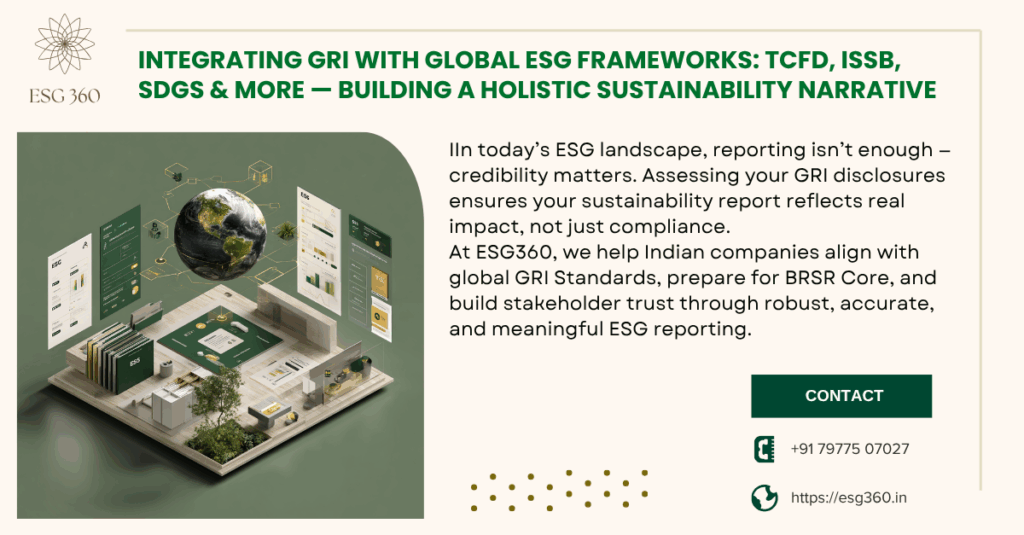
As sustainability reporting becomes mainstream, Indian companies face a unique challenge: meeting multiple, sometimes overlapping requirements from different frameworks. On one side, SEBI’s BRSR and BRSR Core frameworks have made ESG disclosures mandatory for listed companies in India. On the other, international investors and stakeholders expect alignment with globally recognized frameworks like the Global Reporting […]
Assessing GRI Disclosures: Moving Beyond Compliance to Credibility
In today’s corporate landscape, publishing a sustainability report is no longer optional — it’s expected. But as the number of companies reporting increases, so does the need to separate reports that merely comply from those that truly convince. For reports built on the Global Reporting Initiative (GRI) Standards — the world’s most widely used sustainability […]