
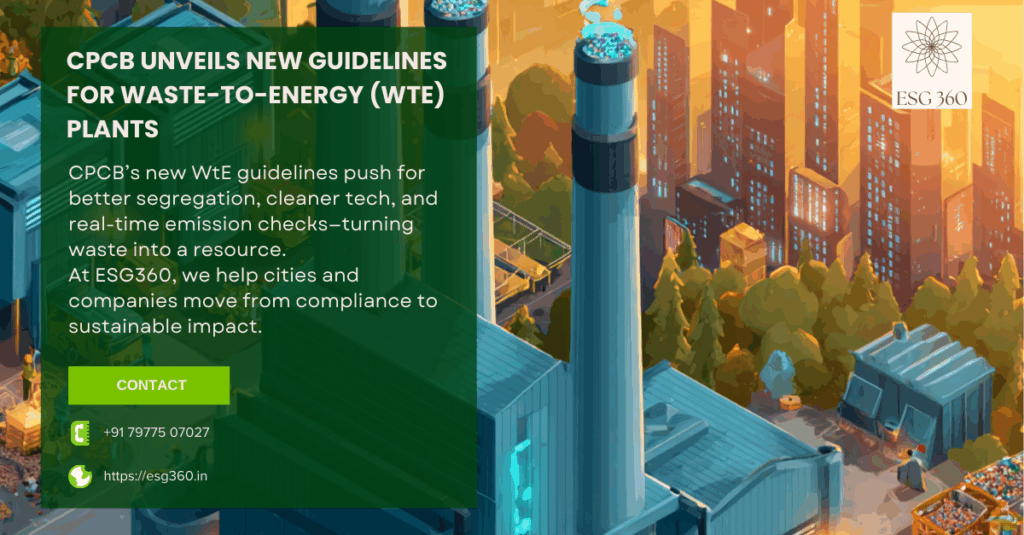
Introduction: Addressing India’s Growing Waste Challenge
India’s urban centers are grappling with an ever-increasing waste burden as population growth, industrialization, and changing consumption patterns continue to exert pressure on local infrastructure. According to recent assessments, over 150,000 tons of municipal solid waste are generated every day in the country, with large metropolitan areas such as Delhi, Mumbai, Bengaluru, and Chennai contributing disproportionately to this figure. A significant portion of this waste remains improperly segregated or is disposed of in landfills without adequate treatment. As a result, environmental and public health concerns such as groundwater contamination, air pollution from burning waste, and the release of methane, a potent greenhouse gas, have worsened.
At the same time, India’s commitments toward renewable energy generation and reducing carbon emissions have prompted policymakers to explore sustainable alternatives to waste disposal. Waste-to-Energy (WtE) technology, particularly incineration-based solutions that convert non-recyclable waste into usable energy, is increasingly being recognized as a viable option to address both waste management and energy generation needs.
However, the adoption of WtE solutions has not been without controversy. Past experiences with poorly designed plants, outdated technologies, and inadequate emission monitoring have led to increased pollution and public opposition. It is within this context that the Central Pollution Control Board (CPCB) has issued updated and comprehensive guidelines aimed at ensuring that WtE plants are operated in an environmentally sound, economically feasible, and socially responsible manner.
Understanding the CPCB Guidelines: A Framework for Sustainable Waste Management
The new CPCB guidelines represent a significant effort to standardize waste handling practices, technology deployment, emission control, and reporting mechanisms across WtE facilities in the country. The guidelines are intended not only for plant operators but also for local municipalities, policymakers, investors, and communities who are stakeholders in the waste-to-energy ecosystem.
Waste Segregation at Source: The Foundation of Efficiency
The guidelines emphasize that waste segregation is the most critical step toward improving the efficiency and environmental impact of WtE plants. It mandates that waste be separated at the source into biodegradable, recyclable, and inert categories. The segregated waste stream with a higher calorific value is then directed toward energy generation processes, while compostable and recyclable materials are processed separately through decentralized collection centers.
By reducing contamination and removing inert materials such as construction debris, glass, and metal, operators can ensure better combustion efficiency and lower emission levels. The CPCB encourages municipalities to adopt incentive-based systems and community awareness campaigns to promote segregation practices among residents.
Technology Selection: Choosing the Right Process
The guidelines recommend that plant operators adopt best available technologies (BAT) that maximize energy recovery while minimizing environmental impact. Depending on the waste composition and available infrastructure, plants may deploy different types of thermal processes for waste treatment such as grate firing, fluidized bed combustion, and rotary kiln incineration.
The guidelines specify that combustion processes must maintain temperatures between 850°C and 1100°C to ensure complete waste incineration and minimize the formation of harmful by-products like dioxins and furans. Furthermore, technological choices must be informed by site-specific assessments, including waste composition analysis, land availability, and local emission sensitivity.
Emission Monitoring: Real-Time Oversight for Environmental Safety
To ensure transparency and compliance, the guidelines require the installation of Online Continuous Emission Monitoring Systems (OCEMS) that track key pollutants such as particulate matter (PM), nitrogen oxides (NOx), sulfur dioxide (SO₂), and hazardous organic compounds. These systems provide real-time data, enabling operators to adjust combustion processes or take corrective actions when emissions exceed permissible thresholds.
Regular audits and reporting to state pollution control boards are also emphasized, with guidelines encouraging public access to emission data for greater accountability.
Handling and Utilization of Ash: From Waste to Resource
The guidelines address the challenge of ash disposal, which has historically been a major environmental concern. WtE plants generate both fly ash and bottom ash, which contain residues from incomplete combustion and inorganic materials.
The CPCB guidelines recommend that ash be treated and, where possible, reused in applications such as road construction, cement production, and brick manufacturing. Proper handling and disposal protocols ensure that ash does not become a secondary source of pollution while also promoting the principles of a circular economy.
Regulatory Compliance: Aligning with Existing Frameworks
The new guidelines integrate provisions from existing regulations, such as the Solid Waste Management Rules, 2016, and the Environment Protection Act, 1986. Plant operators are required to secure environmental clearances and adhere to discharge norms while incorporating emission monitoring systems into their operational protocols.
Additionally, reporting formats are aligned with national and state-level frameworks, ensuring that data collection, monitoring, and auditing are both streamlined and standardized.
Implementation Challenges: Navigating Ground Realities
While the CPCB’s guidelines are well-structured and forward-looking, several challenges could hinder implementation:
- Inadequate Waste Segregation at Source:
- Despite regulatory mandates, many cities struggle with segregation rates as low as 20-30%.
- Behavioral change, citizen participation, and decentralized waste collection frameworks are essential but require sustained effort.
- Limited Availability of High-Calorific Waste:
- Urban waste streams are often dominated by biodegradable material, which is unsuitable for incineration.
- Effective segregation and pre-processing are needed to ensure feedstock quality.
- Financial Barriers to Technology Adoption:
- Upgrading existing facilities or establishing new WtE plants involves significant capital investment.
- Smaller municipalities and private players may find it difficult to access funding or financial incentives.
- Operational and Technical Gaps:
- Many plants rely on outdated technologies and lack adequate skilled manpower to maintain emission control systems and data reporting.
- Ash Disposal Risks:
- Improper handling of fly ash can lead to secondary contamination, posing risks to soil, groundwater, and nearby communities.
Benefits of Adopting CPCB Guidelines: A Multi-Stakeholder Advantage
The adoption of CPCB’s guidelines offers benefits that extend beyond regulatory compliance. For municipal bodies, improved waste management results in reduced landfill usage, cost optimization, and better public health outcomes. For businesses, investing in efficient waste-to-energy solutions can enhance their environmental responsibility profile, attract investors aligned with ESG principles, and unlock new revenue streams. At the community level, cleaner surroundings, reduced air pollution, and improved resource utilization contribute to a healthier living environment.
Case Illustrations: Learning from Practice
Indore’s Waste Management Initiative:
Indore has been a frontrunner in promoting waste segregation, using incentive schemes, door-to-door collection, and awareness drives to achieve segregation rates exceeding 60%. The segregated waste stream has significantly improved the operational efficiency of its WtE plants.
Delhi’s Emission Monitoring Pilot:
Delhi’s waste-to-energy facilities have introduced continuous emission monitoring using OCEMS technology, enabling better compliance tracking and reducing pollutant discharges.
Bangalore’s Ash Utilization Project:
Through collaborations with construction firms, treated ash from WtE plants is being repurposed in road laying projects, effectively converting waste into usable resources while reducing disposal costs.
How ESG360 Supports Effective Implementation
At ESG360, we understand that implementing CPCB’s guidelines requires more than technical compliance—it demands a holistic approach that integrates operational planning, financial modeling, community engagement, and environmental oversight.
Conclusion: Waste as a Resource, Not a Burden
The CPCB’s updated guidelines for Waste-to-Energy plants represent a turning point in India’s quest for sustainable urban waste management. By promoting segregation, technological advancement, and environmental accountability, these guidelines offer a structured path toward reducing landfill dependence, generating clean energy, and improving public health outcomes.
However, the journey from policy to practice requires careful planning, expert knowledge, and cross-sector collaboration. ESG360 stands ready to support businesses and municipalities in navigating these complexities, transforming waste into a sustainable resource while enhancing environmental stewardship and community well-being.