
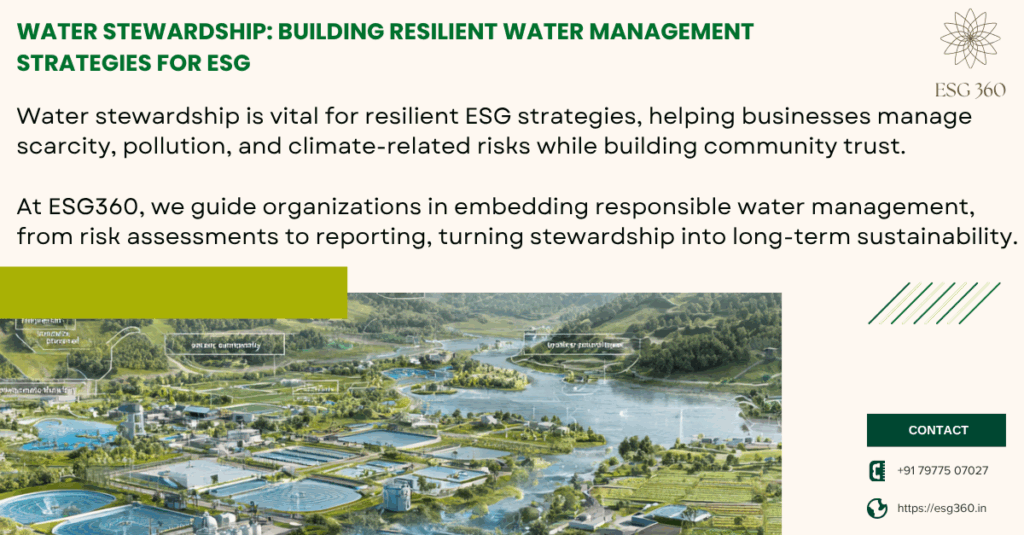
Introduction: Water as a Critical Resource in ESG
Water is one of the most essential and yet increasingly stressed resources across the globe. Rapid industrialization, urban expansion, population growth, and climate change have contributed to water scarcity, pollution, and supply chain disruptions that affect businesses, communities, and ecosystems alike. Agriculture, manufacturing, energy, and consumer goods industries, among others, are particularly dependent on steady access to clean and sustainable water sources.
As Environmental, Social, and Governance (ESG) considerations evolve, water stewardship has become a key pillar in sustainability strategies. It is no longer sufficient for organizations to merely comply with local water laws they must demonstrate proactive management of water-related risks, responsible sourcing, and meaningful contributions toward community water security.
Water stewardship integrates conservation, responsible usage, pollution control, and community engagement. By embedding robust water management practices into ESG frameworks, organizations mitigate operational disruptions, reduce reputational risks, and contribute to broader environmental resilience.
The Water Challenge: Risks Facing Businesses Today
Several water-related risks threaten business continuity, supply chains, and stakeholder trust:
- Water Scarcity:
Over-extraction of groundwater, drought conditions, and unsustainable consumption patterns can lead to water shortages, affecting production and increasing operational costs. - Water Pollution:
Discharge of untreated or poorly managed wastewater, industrial runoff, and chemical contaminants can compromise local ecosystems and human health, leading to regulatory penalties and reputational damage. - Climate Variability:
Extreme weather events, changing rainfall patterns, and rising temperatures affect water availability, quality, and infrastructure reliability, amplifying supply chain vulnerabilities. - Community Relations:
Shared water sources between industries and local communities can create conflicts when water use is seen as disproportionate or harmful to public access.
Addressing these risks through structured water stewardship is a long-term investment that promotes resilience, compliance, and social responsibility.
Components of Effective Water Stewardship
A comprehensive water stewardship strategy aligns with ESG objectives by integrating scientific assessments, operational improvements, and stakeholder partnerships.
- Water Risk Assessment and Mapping
The first step in any stewardship effort is understanding where and how water is used, the associated risks, and the availability of freshwater sources. Water risk assessments typically include:
- Evaluating water intensity across operations and supply chains.
- Mapping geographical areas vulnerable to scarcity or pollution.
- Identifying regions where water stress may impact productivity or community relations.
Tools like the Aqueduct Water Risk Atlas and local hydrological studies help organizations prioritize high-risk areas for intervention.
- Reducing Water Consumption
Water efficiency initiatives focus on minimizing usage through process optimization, recycling, and technology upgrades. Techniques include:
- Installing low-flow fixtures and automated monitoring systems.
- Adopting dry cooling technologies in energy-intensive sectors.
- Implementing closed-loop water recycling within manufacturing processes.
Monitoring systems ensure real-time tracking of consumption patterns, enabling timely interventions and reducing waste.
- Wastewater Treatment and Reuse
Treatment of wastewater before discharge is crucial to preventing pollution. Companies are investing in:
- Effluent treatment plants (ETPs) that meet discharge norms.
- Zero Liquid Discharge (ZLD) systems that recycle all wastewater for reuse.
- Monitoring technologies that track pollutants such as heavy metals, organic compounds, and nutrient loads.
Reusing treated water for non-potable purposes, landscaping, or industrial processes helps conserve freshwater sources while reducing discharge volumes.
- Community Engagement and Shared Water Solutions
Water stewardship recognizes that access to water is a shared responsibility. Companies are increasingly collaborating with local governments, NGOs, and community groups to:
- Develop water-sharing agreements that balance industrial and public needs.
- Support watershed restoration and rainwater harvesting projects.
- Provide safe drinking water infrastructure to underserved regions.
Such partnerships build trust, enhance brand reputation, and create long-term alliances with stakeholders.
- Reporting, Compliance, and Disclosure
Transparent communication about water usage, conservation efforts, and community partnerships is vital for building credibility. Aligning reporting with frameworks such as GRI 303, CDP Water Questionnaire, and BRSR disclosuresensures stakeholders are informed of risks and interventions.
Water stewardship reporting includes key metrics such as:
- Total water withdrawal and consumption.
- Water recycled or reused.
- Percentage of water sources under stress.
- Community engagement initiatives and outcomes.
Accurate reporting also supports investor confidence, regulatory compliance, and cross-sector benchmarking.
Case Illustrations: Water Stewardship in Action
A Beverage Company’s Watershed Collaboration:
A global beverage brand partnered with local authorities to restore watershed areas near its production facilities. By supporting rainwater harvesting and afforestation initiatives, the company ensured long-term water availability and strengthened community relations.
A Manufacturing Unit’s Recycling Initiative:
A manufacturing plant reduced freshwater dependency by 35% through the installation of closed-loop systems and real-time consumption tracking. The treated wastewater is now reused for non-potable operations, lowering costs and emissions.
A Mining Operation’s Community Water Access Program:
A mining enterprise implemented safe drinking water projects in nearby villages, combining infrastructure investments with education on water conservation, resulting in improved health outcomes and social goodwill.
How ESG360 Supports Water Stewardship Strategies
At ESG360, we help companies build resilient and responsible water management strategies that align with ESG goals and community expectations.
Our services include:
- Conducting water risk assessments using scientific data and regional mapping tools.
- Advising on water efficiency projects, wastewater treatment solutions, and recycling practices.
- Helping organizations engage with local communities and stakeholders to co-create sustainable water initiatives.
- Supporting alignment with ESG reporting frameworks such as GRI 303, BRSR, and CDP Water disclosures.
- Facilitating knowledge-sharing workshops and training programs that promote water stewardship culture.
Our approach ensures that water is not only a resource to be managed but a responsibility to be shared—building trust, resilience, and long-term sustainability.
Conclusion
Water stewardship is a critical pillar of ESG that extends far beyond regulatory compliance. By understanding water-related risks, improving operational efficiency, and engaging with communities, businesses can create sustainable and responsible water management frameworks that safeguard both ecological and economic well-being.
ESG360 helps organizations navigate the complexities of water governance, from risk assessment to reporting and community engagement, ensuring that water stewardship becomes an integral part of their ESG journey.