
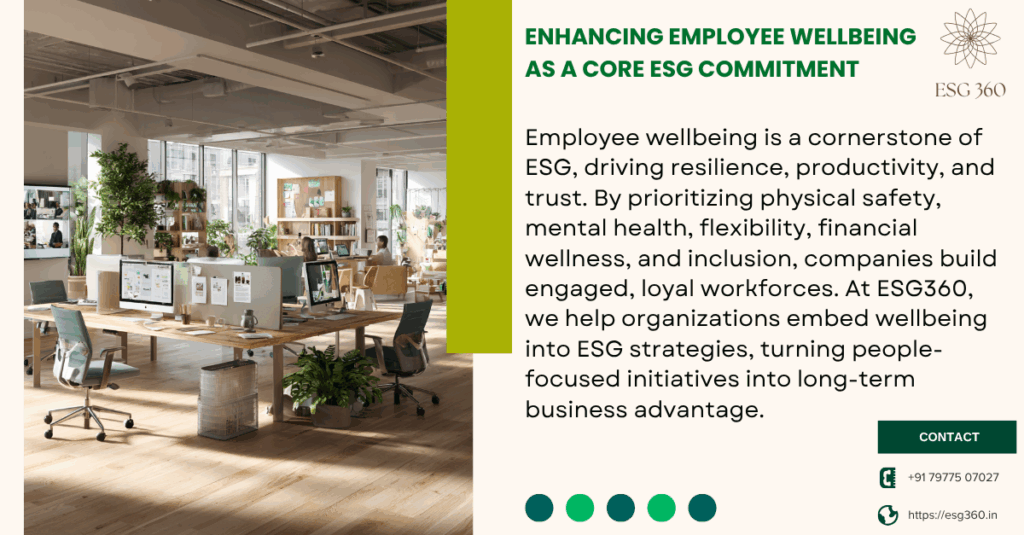
Introduction: Why Employee Wellbeing Matters in ESG
As businesses increasingly integrate Environmental, Social, and Governance (ESG) principles into their long-term strategies, the ‘Social’ component is gaining renewed attention. Among various social considerations, employee wellbeing has emerged as a critical driver of organizational resilience, productivity, and stakeholder trust. Companies that prioritize the health, safety, and mental wellness of their workforce not only enhance operational efficiency but also create a more engaged, motivated, and loyal workforce.
The growing expectations from investors, employees, customers, and regulatory bodies further underscore the need for comprehensive employee wellbeing programs. Organizations are being evaluated not just on their financial performance but also on how they treat their people especially in an era shaped by global health crises, mental health awareness, flexible working models, and social inclusion.
Employee wellbeing, when embedded as a core ESG commitment, serves as a bridge between operational excellence and human-centric leadership. It influences recruitment, retention, workplace culture, risk mitigation, and brand reputation, positioning wellbeing as a strategic imperative rather than a peripheral initiative.
The Scope of Employee Wellbeing in ESG
Employee wellbeing encompasses a holistic approach that goes beyond physical health and safety. ESG frameworks increasingly recognize that workforce wellbeing includes emotional, psychological, social, and financial health, each influencing performance and retention.
- Physical Health and Safety
Occupational health and safety (OHS) are foundational elements of employee wellbeing. Safe work environments, ergonomically designed workplaces, access to medical care, and regular health check-ups contribute to reducing workplace incidents and absenteeism.
For industries with high operational hazards, such as manufacturing or logistics, OHS protocols are particularly critical. Regular training, risk assessments, and emergency preparedness form the backbone of health protection strategies.
- Mental Health and Psychological Wellbeing
Workplace stress, burnout, and anxiety are growing concerns across sectors. Employee assistance programs, counseling services, stress management workshops, and peer support networks are now widely implemented to ensure mental health is prioritized.
Forward-looking companies also recognize that stigma around mental health can be a barrier to accessing care. Training programs for managers, open communication channels, and wellness campaigns can help foster a supportive culture where employees feel empowered to seek help.
- Work-Life Balance and Flexibility
Flexible work arrangements, leave policies, childcare support, and family-friendly initiatives reflect a company’s commitment to work-life balance. With hybrid and remote working models becoming the norm, companies are reimagining how they support employees’ personal responsibilities without compromising productivity.
Wellbeing initiatives that respect personal boundaries and provide flexibility are especially attractive to younger, talent-driven workforces who prioritize autonomy and purpose.
- Financial Wellness
Access to fair compensation, retirement planning, healthcare benefits, and insurance coverage plays a significant role in employee security and satisfaction. Financial stress can undermine mental health and engagement, making financial wellness a key component of comprehensive wellbeing strategies.
Transparent communication regarding benefits and structured support programs can enhance trust and financial planning.
- Inclusion, Diversity, and Community Support
Employee wellbeing is closely linked to inclusion and belonging. Organizations that create diverse workplaces where differences in gender, ethnicity, disability, and socio-economic background are respected foster environments that enhance morale and psychological safety.
Programs that promote equity and ensure representation not only improve workplace culture but also strengthen corporate reputation and attract diverse talent pools.
ESG Reporting and Employee Wellbeing
Incorporating employee wellbeing into ESG reporting requires organizations to move beyond anecdotal evidence and establish measurable, transparent frameworks that demonstrate their commitment.
Metrics such as employee turnover rates, absenteeism, incident reports, training hours, mental health program participation, and workplace satisfaction surveys are increasingly tracked to assess wellbeing performance. Furthermore, aligning wellbeing programs with reporting frameworks such as GRI Standards, SASB, or BRSR helps create standardized disclosures that build investor confidence and ensure regulatory alignment.
Effective reporting also demands transparency around challenges. For example, organizations are encouraged to disclose areas where wellbeing initiatives are still evolving or where additional support mechanisms are being implemented.
Case Examples: Wellbeing as a Strategic Advantage
A Tech Firm’s Mental Health Initiative:
A global technology company introduced mental health first-aid training, access to counseling services, and stress management workshops, resulting in a measurable decrease in absenteeism and increased employee engagement scores.
A Manufacturing Company’s Safety Programs:
A large industrial manufacturer revamped its OHS protocols, implementing predictive safety analytics to anticipate risks. This led to a 40% reduction in workplace incidents and improved employee confidence.
A Financial Institution’s Work-Life Balance Program:
A financial services provider rolled out flexible work-from-home policies and childcare support, contributing to improved retention rates, particularly among women returning to the workforce.
These examples demonstrate that employee wellbeing is not a charitable initiative but a strategic investment with tangible benefits for performance, culture, and brand equity.
How ESG360 Supports Employee Wellbeing Strategies
At ESG360, we help organizations design and implement comprehensive employee wellbeing frameworks that align with ESG principles, industry best practices, and regulatory requirements.
Our approach includes:
- Conducting diagnostic assessments to understand workforce needs and identify gaps in health, safety, and mental wellness programs.
- Assisting organizations in developing data-driven wellbeing strategies supported by actionable roadmaps and measurable outcomes.
- Advising on aligning wellbeing initiatives with ESG reporting frameworks such as GRI and BRSR, ensuring compliance and credibility.
- Offering capacity-building programs that equip leadership teams with tools to foster psychological safety, inclusion, and resilience.
- Supporting organizations in creating communication strategies that enhance employee awareness, participation, and trust.
Through our expertise, we help organizations build human-centric workplaces where wellbeing is embedded into the core culture and ESG narrative.
Conclusion
Employee wellbeing is a cornerstone of sustainable, responsible business practices. As ESG frameworks increasingly recognize workforce health and safety as strategic imperatives, companies that invest in comprehensive wellbeing initiatives create environments where employees feel supported, valued, and empowered to perform at their best.
By integrating physical safety, mental health, work-life balance, financial wellness, and inclusion into a coherent ESG strategy, organizations can enhance productivity, reduce risk, and strengthen stakeholder trust.
ESG360 stands ready to guide companies in embedding employee wellbeing into their sustainability journey—transforming human capital management from a compliance requirement into a catalyst for long-term growth and resilience.